Best eCommerce Platform | WooCommerce vs Shopify, Wix, Squarespace & More
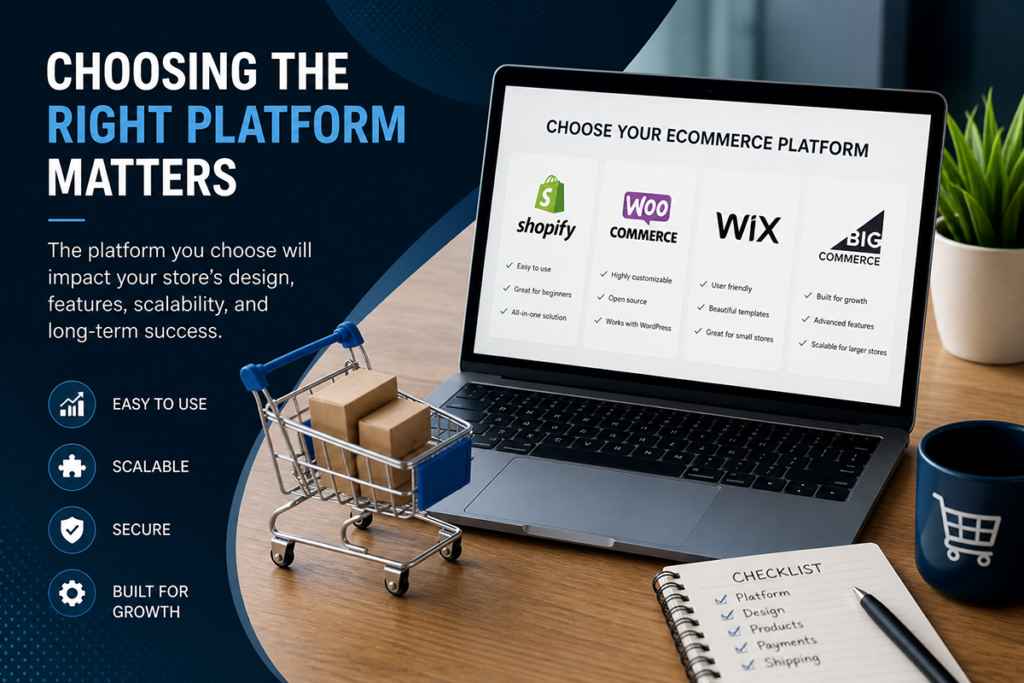
When building an online store, one of the biggest decisions you’ll make is choosing the right platform. The most common options fall into two categories: hosted eCommerce website builders like Shopify, Wix, Squarespace, and GoDaddy, and open platforms like WooCommerce built on WordPress. While both can help you sell online, they differ significantly in flexibility, cost, control, and long-term growth potential.
WooCommerce: Maximum Control and Flexibility
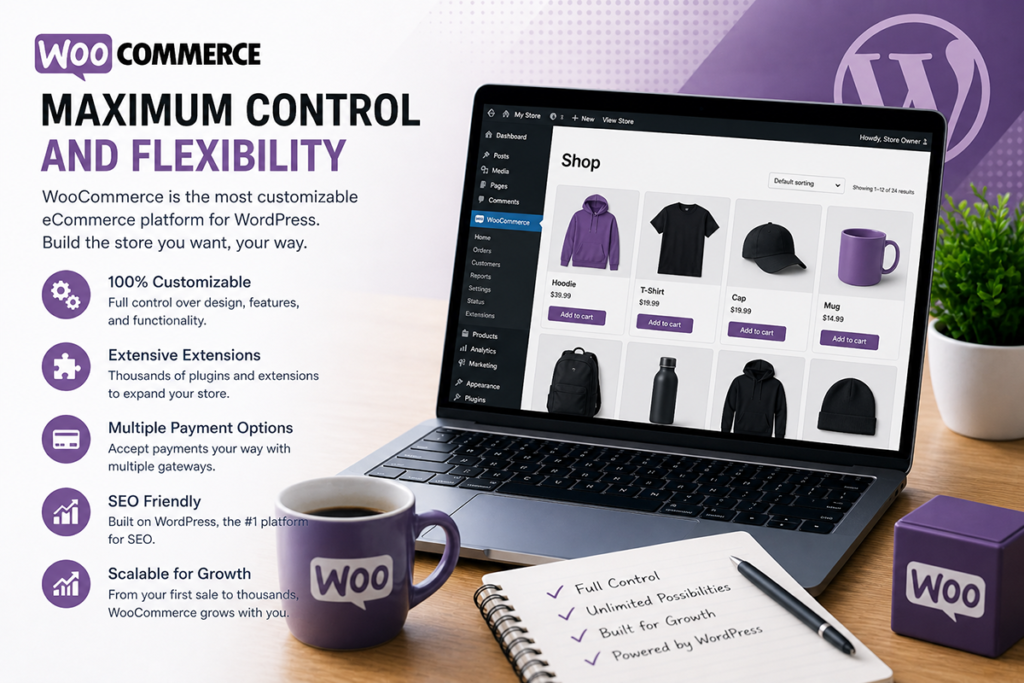
WooCommerce is a plugin for WordPress that turns your website into a fully functional online store. Its biggest advantage is control. Because it’s open-source, you can customize every aspect of your store—from design to checkout functionality to integrations.
WooCommerce is ideal for businesses that want to scale. Whether you’re selling a few products or thousands, it can handle complex catalogs, variable pricing, subscriptions, memberships, and more. It also integrates seamlessly with payment gateways, shipping providers, and marketing tools.
Another major advantage is SEO. WooCommerce benefits from WordPress’s powerful SEO capabilities, allowing you to fully optimize product pages, categories, and content. This makes it easier to rank in search engines and attract organic traffic.
The trade-off is that WooCommerce requires more setup and management. You’ll need hosting, security, and updates, but in return, you gain full ownership of your store.
Shopify: Simple and Scalable
Shopify is one of the most popular hosted eCommerce platforms. It’s designed to make launching an online store easy, even for beginners. Everything is included—hosting, security, and updates—so you don’t need to worry about technical details.
Shopify is strong in usability and reliability. It offers a clean interface, a large app marketplace, and built-in tools for inventory, payments, and shipping. It’s especially popular for businesses that want to get up and running quickly.
However, Shopify is a closed platform. Customization is limited compared to WooCommerce, and advanced features often require paid apps, which can increase monthly costs. Transaction fees may also apply unless you use Shopify Payments.
Wix eCommerce: Easy but Limited
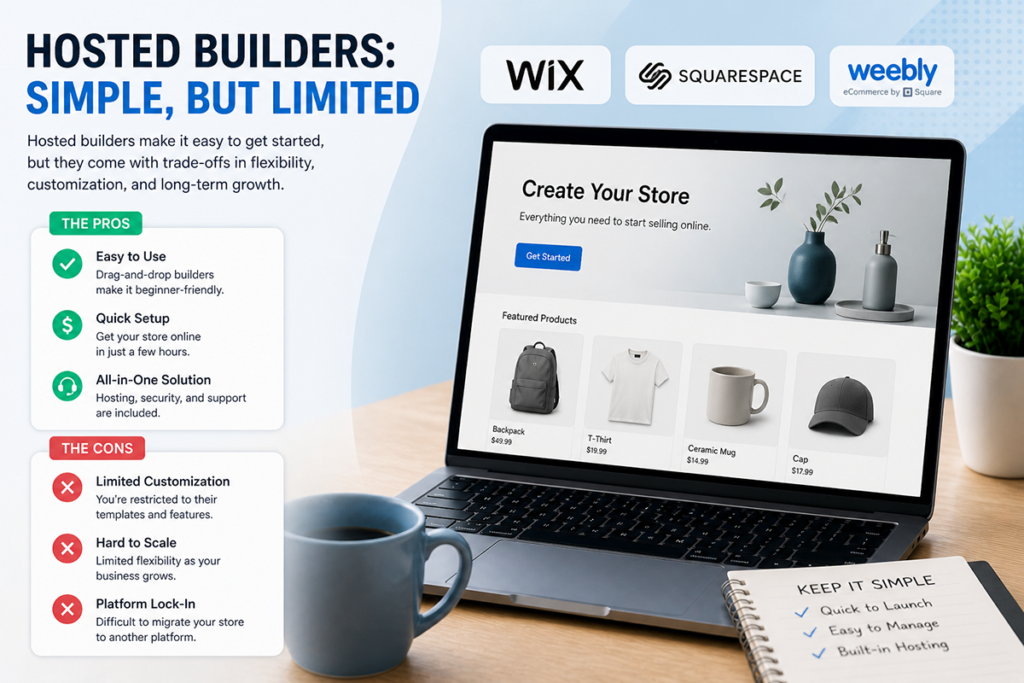
Wix offers an eCommerce solution built into its drag-and-drop website builder. It’s very beginner-friendly and allows you to create a visually appealing store quickly.
Wix is suitable for small stores with simple needs. It includes basic features like product listings, payments, and shipping options. However, it lacks the depth and scalability of WooCommerce or Shopify.
As your store grows, you may find Wix limiting in terms of customization, integrations, and performance. Like other builders, it’s also a closed system, meaning you don’t fully control your site.
Squarespace Commerce: Design-Focused Selling
Squarespace is known for its beautiful templates, and its eCommerce features follow the same design-first approach. It’s a good option for creatives, small boutiques, and brands that prioritize aesthetics.
Squarespace offers built-in tools for selling products, managing inventory, and processing payments. However, it’s less flexible than WooCommerce and less powerful than Shopify for larger or more complex stores.
Customization and integrations are more limited, and scaling beyond a certain point can be challenging.
GoDaddy eCommerce: Quick Setup, Basic Features
GoDaddy’s eCommerce builder is designed for speed and simplicity. It allows users to create a basic online store quickly with minimal effort.
While it’s easy to use, it’s also the most limited option. Design flexibility, advanced features, and scalability are all restricted. It’s best suited for very small businesses or temporary stores rather than long-term growth.
Other Platforms: BigCommerce and Ecwid
BigCommerce is another hosted platform similar to Shopify but with more built-in features and fewer reliance on apps. It’s a strong option for larger businesses but still lacks the full customization of WooCommerce.
Ecwid is a lightweight solution that can be added to an existing website. It’s useful for adding eCommerce functionality without rebuilding your site, but it’s not as robust as a full platform.
Key Differences That Matter
The main difference between WooCommerce and hosted builders comes down to control vs convenience.
- WooCommerce: Full control, maximum customization, best for SEO and long-term growth
- Shopify: Easy to use, scalable, but can become expensive with apps
- Wix & Squarespace: Simple and design-focused, but limited for growing stores
- GoDaddy: Fast and basic, but not built for serious eCommerce
- BigCommerce: Strong hosted option, but still less flexible than WooCommerce
Final Thoughts
If you want a quick and simple way to start selling online, platforms like Shopify, Wix, or Squarespace can be a good fit. But if you’re serious about building a scalable, customizable, and SEO-friendly online store, WooCommerce is the clear winner.
While it requires a bit more setup, WooCommerce gives you complete control over your business, your data, and your future growth—making it the best long-term investment for most online stores.